Zhida Plastic Machinery
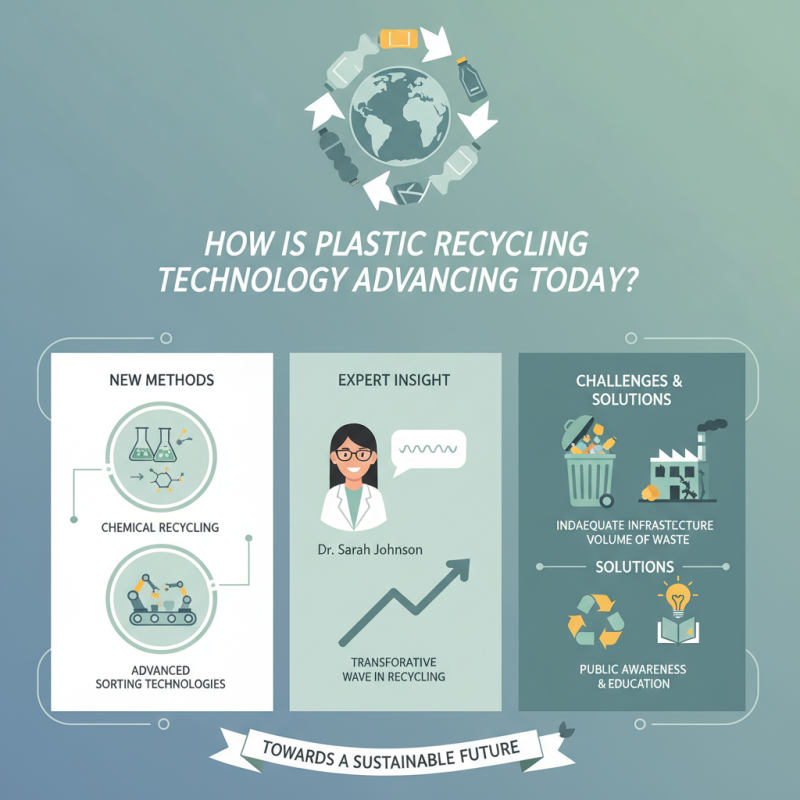
As the world increasingly confronts plastic pollution, the focus on recycling technology has intensified. Understanding "How Plastic Recycling Technology Is Evolving" is crucial for sustainable solutions. Expert Dr. Sarah Johnson, a leader in polymer science, emphasizes the importance of innovation in this field. She stated, “The advancements we see today are just the beginning of a transformative wave in recycling.”
New methods such as chemical recycling and advanced sorting technologies are emerging. These innovations can significantly enhance the efficiency of recycling processes. However, challenges still exist. For instance, the current infrastructure in many regions is inadequate. Many facilities struggle to keep up with the volumes of plastic waste generated daily.
Moreover, public awareness and participation in recycling remain inconsistent. Education on proper recycling methods is vital. It helps address the gaps in current practices. As we explore these advancements, it’s essential to reflect on the journey of plastic recycling. Embracing both progress and shortcomings can lead to a more sustainable future for plastic waste management.
Plastic recycling technology is witnessing remarkable advancements today. Innovative techniques are emerging, transforming the recycling landscape. For instance, chemical recycling is gaining traction, enabling the breakdown of plastics into their fundamental components. According to a report by the Ellen MacArthur Foundation, only 9% of plastic waste was effectively recycled globally as of 2020. This highlights the pressing need for improved technologies.
Recent breakthroughs also include enzymatic recycling. Scientists have developed enzymes that can digest plastics like PET. This method offers a potential alternative to traditional recycling, reducing energy consumption by up to 50%. Industry experts estimate that this could lead to a significant increase in recycling rates, possibly reaching 30% in the next few years.
Tip: Consider adopting a circular mindset. Educate yourself on proper recycling practices. Even small changes can make a difference.
Despite these advancements, challenges persist. The infrastructure for recycling is still underdeveloped in many areas. Contamination remains a significant hurdle. Overall, while technology advances, societal commitment toward recycling needs to catch up. There’s no doubt about the potential impact of these innovations on the environment, but action is necessary both by industries and consumers.
Modern plastic recycling methods have advanced significantly in recent years. These innovations focus on improving efficiency and reducing waste. Key processes in plastic recycling include sorting, shredding, and washing. Efficient sorting is crucial for separating different plastic types, as contamination can hinder the recycling process.
Shredding breaks down plastic into smaller pieces, making it easier to process. This step also helps in identifying the quality of the material. The added washing phase removes contaminants, ensuring cleaner output. However, not all plastics are recyclable, which remains a challenge. Some materials require complex processing, which can be costly.
Advanced techniques like pyrolysis and chemical recycling are gaining interest. Pyrolysis converts plastic into oil or gas, offering a way to recycle contaminated plastics. Meanwhile, chemical recycling breaks down plastics into their original monomers. This method holds promise but needs further development. As technology matures, the potential for greater efficiency and less environmental impact increases. Still, achieving a circular economy in plastics is a work in progress.
| Process | Description | Advantages | Challenges |
|---|---|---|---|
| Mechanical Recycling | Involves physically processing used plastics into new products without changing the polymer structure. | Preserves material properties and is cost-effective. | Limited to certain types of plastics; quality degradation over multiple cycles. |
| Chemical Recycling | Breaks down plastics into their original monomers for reuse in new plastic production. | Can handle a wider variety of plastics and avoid quality degradation. | Higher costs and more complex technology required. |
| Energy Recovery | Converts plastics into energy through combustion or other thermal processes. | Reduces waste volume and generates energy. | Releases emissions and does not provide materials back for recycling. |
| Biological Recycling | Utilizes microorganisms to break down plastics into biodegradable substances. | Potentially sustainable and environmentally friendly. | Currently in development; efficiency and scalability are concerns. |
Chemical recycling is gaining momentum as a vital part of addressing plastic waste. This technology has the potential to break down plastics into their fundamental building blocks, making it possible to reuse them in new products. According to a recent report by the International Energy Agency, chemical recycling could handle up to 10% of global plastic waste by 2030, significantly impacting waste management.
The process allows for the recycling of materials that are often deemed non-recyclable through traditional methods. Research shows that around 80% of plastics end up in landfills or the environment. By implementing chemical recycling, we can divert a large portion of this waste. This method recycles mixed plastics, which are currently challenging to process.
Still, there are challenges to overcome. The technology requires energy-intensive processes, raising concerns about emissions and resource use. Additionally, the scalability of plants poses a significant barrier. Insight from experts indicates that ongoing research and investment are crucial for optimizing efficiency. More improvements are necessary for chemical recycling to become a mainstream solution. Balancing innovation with sustainability remains a complex puzzle in plastic waste management.
As recycling technologies evolve, automation and AI are reshaping how plastic materials are processed. Advanced sensors and machine learning algorithms now identify and sort plastics at lightning speed. This efficiency dramatically reduces contamination rates, allowing for cleaner recycling streams. Automated systems operate with precision but can struggle with novel materials. This gap highlights the need for ongoing research and adaptation.
The integration of AI brings significant insights. Predictive analytics can optimize recycling schedules and routes, reducing costs. However, not all facilities can afford the latest technologies. Smaller operators may lag behind, creating inconsistencies in recycling efforts. Balancing innovation with accessibility remains a challenge in the recycling sector.
While these advancements are promising, they also raise questions. Are we focusing too much on technology rather than grassroots education? Community involvement is crucial. Educating consumers about proper disposal methods enhances efficiency and the overall impact of automation. These complexities reflect the multifaceted nature of modern recycling. The journey of improving recycling technology is ongoing, calling for reflection and commitment from all stakeholders.
Plastic recycling technology is experiencing significant advancements, driven by the necessity for sustainable waste management. As global plastic production reached an astounding 368 million metric tons in 2019, effective recycling methods are critical to address this challenge. The World Economic Forum projects that, without intervention, plastic waste could outweigh fish in the oceans by 2025. Emerging technologies are increasingly focused on improving the efficiency of recycling processes.
Innovations like chemical recycling, which can process mixed plastics, are gaining traction. This method addresses the weaknesses of traditional mechanical recycling, which typically struggles with contaminants. According to a report by the Ellen MacArthur Foundation, improving chemical recycling could help recycle an additional 30% of plastic waste, representing a substantial shift toward sustainability. However, challenges remain in scaling these technologies and ensuring economic viability.
Another growing trend involves the use of artificial intelligence (AI) to enhance sorting mechanisms. AI-driven systems can accurately identify various plastic types, leading to more efficient recycling streams. Despite these advancements, the lack of consistent global recycling standards raises concerns over effectiveness. Many facilities still operate below capacity, indicating a need for improvements in operational practices and infrastructure. Sustainable growth in this field requires ongoing investment and a commitment to innovation.
This chart illustrates the current investments and implementations in various plastic recycling technologies as of 2023. Mechanical recycling leads the sector with significant investment, followed by chemical recycling. These advancements contribute to a more sustainable future by enhancing recycling efficiency and reducing environmental impact.
: Chemical recycling is a process that breaks down plastics into basic building blocks for reuse.
It could manage up to 10% of global plastic waste, making a significant impact.
It can recycle materials often considered non-recyclable through traditional methods.
About 80% of plastics ultimately end in landfills or the environment.
Energy-intensive processes raise concerns about emissions and resource use.
Innovations, like AI, enhance sorting mechanisms for more efficient recycling.
It effectively processes mixed plastics that are difficult for traditional methods.
There is a lack of consistent standards, raising concerns about overall effectiveness.
Many facilities still operate below capacity, indicating a need for operational improvements.
Ongoing investment and innovation are crucial for better efficiency and scalability.
Recent advancements in plastic recycling technology have significantly transformed the landscape of waste management. Innovations such as enhanced sorting techniques and advanced processing methods have increased the efficiency and effectiveness of plastic recovery. Key processes like mechanical recycling and the rise of chemical recycling are crucial in tackling plastic waste, enabling the conversion of discarded plastics into valuable raw materials.
Moreover, the integration of automation and artificial intelligence is enhancing recycling operations, streamlining workflows, and improving sorting accuracy. Looking ahead, emerging trends indicate a stronger focus on sustainability, with new technologies aimed at closing the loop on plastic use. Overall, understanding "How Plastic Recycling Technology Is Evolving" is essential for envisioning a future where plastic waste is minimized and resources are utilized more sustainably.
