Zhida Plastic Machinery
Choosing plastic processing equipment is not merely a purchasing decision. It shapes product consistency, energy use, maintenance workload, and long-term production risk. In practice, a machine that looks affordable can create expensive problems through unstable temperatures, excessive scrap, or difficult cleaning.
The need for careful selection is supported by industry data. PlasticsEurope reported global plastics production of approximately 400.3 million tonnes in 2022. The OECD’s Global Plastics Outlook also found that only about 9% of plastic waste was recycled globally between 2019 and 2020. These figures reveal two pressures: manufacturers must increase output while using materials more responsibly. The right extruder, injection molding machine, or auxiliary system can reduce process variation and support more efficient material use.
A practical Plastic Processing Equipment Selection Guide should examine more than speed and purchase price. Engineers need to compare material behavior, melt flow, mold design, throughput, temperature control, automation, and spare-parts access. A 500-ton machine may appear impressive, but it may be unsuitable for a thin-wall product requiring precise pressure control. Small details matter, such as a stable hopper feed or a clean filter screen during a night shift.
Energy performance also deserves attention. The U.S. Department of Energy identifies motor systems, heating, and compressed air as important industrial energy users. Yet efficiency claims are not always comparable. Test conditions differ. That is easy to overlook.
Reliable selection requires production trials, supplier verification, lifecycle-cost analysis, and operator feedback. No guide can remove every uncertainty. However, a disciplined evaluation can expose weak assumptions before they become daily production losses.
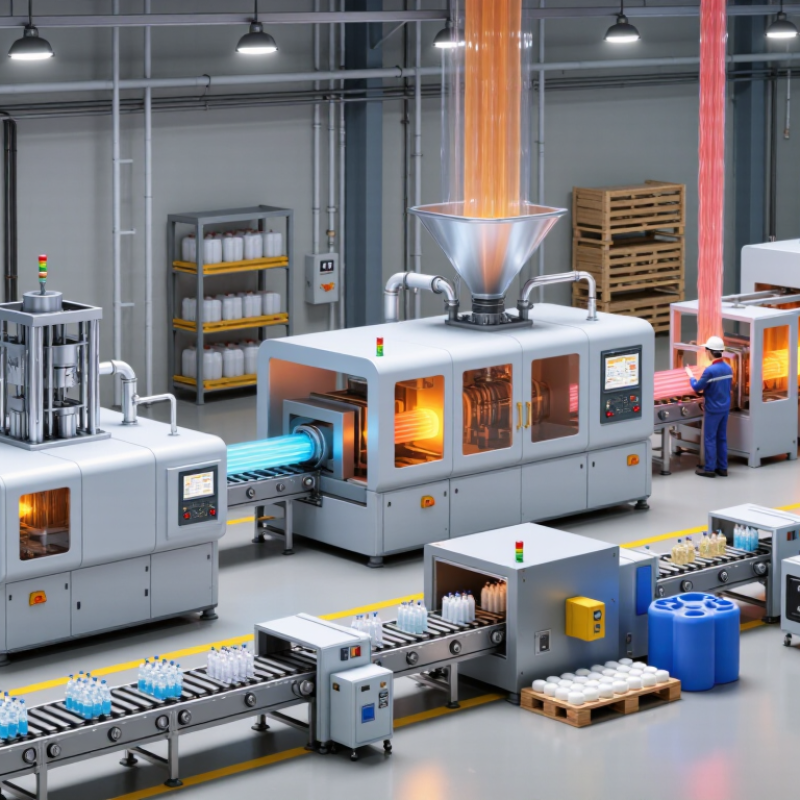
Choosing plastic processing equipment starts with the part, not the machine. Each equipment type performs a different core function.
Injection molding melts pellets and pushes them into a closed mold. It suits precise parts, repeated cycles, and high-volume production.
Extrusion creates continuous products, such as pipes, sheets, films, and profiles.
Blow molding forms hollow containers by expanding a heated tube inside a mold.
Thermoforming heats plastic sheets, then shapes them over a tool using vacuum or pressure.
Compounding equipment blends polymers, additives, and fillers for improved strength, color, or heat resistance.
Recycling lines sort, shred, wash, and reprocess used plastic, although contamination can reduce final quality.
According to Plastics Europe’s Plastics—The Fast Facts 2024, global plastic production reached 413.8 million tonnes in 2023. That scale makes process control increasingly important. The OECD’s Global Plastics Outlook reports that only 9% of plastic waste was recycled in 2019. Equipment choice affects waste, energy use, and product consistency.
Tips: Match the machine to resin behavior, part geometry, output targets, and maintenance skills. Check melt temperature, moisture sensitivity, cooling time, and mold complexity before purchasing. A faster machine is not always better. Excess speed can increase defects and scrap. In practice, small trials often reveal problems that brochures hide. Review cycle data, rejection rates, and operator feedback. This step is easy to overlook. Also compare energy consumption under real operating conditions, not only rated capacity. A technically advanced line may still be unsuitable when cleaning, tooling changes, or spare parts are difficult.
Plastic equipment should match the material, not merely the planned output. Resin type, melt temperature, viscosity, moisture, and filler content all affect processing stability. A hygroscopic material may require controlled drying before molding or extrusion. Without it, bubbles, brittleness, and surface marks can appear.
In production trials, engineers often examine how the material flows through the screw, barrel, die, or mold. High-viscosity compounds may need stronger drive capacity and suitable screw geometry. Heat-sensitive polymers require gentle melting and accurate temperature control. Glass-filled materials can increase wear, so contact surfaces need appropriate resistance. Small details matter.
Throughput is only one measurement. Pressure stability, cooling performance, cleaning time, and energy use also influence equipment suitability. Operators should review material safety data, processing windows, and supplier test results before making a decision. A short trial with actual production-grade material can reveal problems that laboratory samples hide.
A spreadsheet may look convincing.
Yet it can miss real behavior.
Some selections fail because the equipment is technically capable but difficult to operate consistently. I have seen minor moisture changes affect dimensions across a full production run. That experience makes adjustment access, sensor accuracy, maintenance space, and operator training equally important. Equipment matching is not perfectly predictable, so recorded trials and honest review should guide the final choice.
Why Choose the Right Plastic Processing Equipment?
How Equipment Choice Affects Product Quality and Production Efficiency
In practical production work, equipment choice quickly appears in the finished part. A poorly matched screw can leave unmelted pellets, color streaks, or unstable dimensions. I have seen operators adjust temperatures repeatedly when the real issue was inadequate mixing. The machine was not simply “running badly.” It was being asked to do the wrong job.
Material behavior should guide the selection. A heat-sensitive polymer needs controlled residence time and accurate temperature zones. Reinforced compounds may require wear-resistant components and stronger conveying torque. For thin-wall parts, stable pressure and responsive control are essential. Small errors become visible quickly. Warped edges. Short shots. Excessive flash.
Efficiency also depends on repeatability, not only cycle speed. Equipment with consistent feeding reduces scrap and protects production schedules. Easy access to filters, heaters, and wear parts can shorten maintenance work. Operators need clear data from sensors, yet too many alarms can create confusion. That balance is often overlooked. I have also learned that laboratory trials cannot predict every factory condition. Ambient temperature, material moisture, and operator habits may change the result. A careful equipment review should include trials, maintenance records, safety requirements, and realistic output targets before purchase.
| Equipment Type | Typical Materials and Products | Typical Throughput or Cycle Range | Typical Energy Intensity | Quality and Process Control Impact | Material Utilization | Changeover and Production Efficiency |
|---|---|---|---|---|---|---|
| Hydraulic Injection Molding | Thermoplastics; housings, automotive parts, containers, and general industrial components | Approximately 15–120 seconds per cycle, depending on part size, wall thickness, and mold design | Typically about 0.8–1.5 kWh/kg of processed material | Good repeatability when pressure, temperature, cooling, and mold conditions are carefully controlled; hydraulic pressure fluctuations may affect consistency | High for near-net-shape parts; runners and sprues may require regrinding or recycling | Proven for high-volume production, but mold changes and hydraulic warm-up can increase downtime |
| Electric Injection Molding | Thermoplastics; precision medical components, electronics parts, thin-wall packaging, and small technical parts | Approximately 3–60 seconds per cycle for many small and medium-sized parts | Typically about 0.4–0.8 kWh/kg of processed material | High repeatability due to precise servo control, stable injection speed, accurate metering, and consistent mold protection | High for precision molding; optimized hot-runner or cold-runner systems can further reduce scrap | Fast response and low idle energy consumption support frequent production changes and lean manufacturing |
| Single-Screw Extrusion | PE, PP, PVC, ABS, and other thermoplastics; pipe, sheet, film, profiles, and continuous tubing | Approximately 50–1,000 kg/h, depending on screw diameter, material, and product geometry | Typically about 0.25–0.70 kWh/kg of processed material | Continuous melt pressure and temperature control are essential for stable dimensions, surface finish, and output consistency | Very high for continuous products; startup purge, trim, and off-spec material are the main sources of waste | Highly efficient for long production runs; die cleaning and material purging can extend changeover time |
| Blown Film Extrusion | LDPE, LLDPE, HDPE, and barrier resin blends; packaging film, agricultural film, and industrial liners | Approximately 30–500 kg/h, depending on film width, thickness, and number of layers | Typically about 0.35–0.80 kWh/kg of processed material | Air-ring stability, bubble control, melt temperature, and automatic thickness control directly affect gauge uniformity and film strength | High during stable operation; edge trim and startup waste depend on die design and process control | Efficient for continuous high-volume output; resin purging and color changes may reduce line availability |
| Thermoforming | PS, PET, PP, PVC, and multilayer sheets; food trays, packaging inserts, disposable products, and liners | Approximately 5–40 cycles per minute, depending on sheet thickness, mold area, and heating requirements | Typically about 0.8–2.0 kWh/kg of processed material, largely influenced by sheet heating and oven efficiency | Heating uniformity, plug-assist control, vacuum distribution, and cooling determine wall-thickness distribution and dimensional accuracy | Moderate to high; skeleton scrap is common but can often be collected and recycled when material structure permits | Suitable for medium-to-high volumes; tooling can be economical, while sheet changes and mold setup affect downtime |
| Extrusion Blow Molding | HDPE, PP, PETG, and other thermoplastics; bottles, jerry cans, tanks, and hollow industrial parts | Approximately 5–60 seconds per cycle, depending on container volume, number of cavities, and cooling time | Typically about 0.7–1.5 kWh/kg of processed material | Parison programming, mold cooling, and controlled air pressure influence wall-thickness distribution, top-load strength, and container weight | Moderate to high; flash and pinch-off waste can be minimized through optimized tooling and process settings | Well suited to automated, high-volume production; cooling capacity often determines total cycle efficiency |
| Compression Molding | Thermosets, rubber, SMC, and composite materials; electrical components, automotive parts, seals, and structural panels | Approximately 30 seconds–10 minutes per cycle, depending on material cure time, part thickness, and mold temperature | Typically about 0.5–1.5 kWh/kg of processed material, excluding auxiliary heating systems | Accurate temperature, pressure, cure-time, and material-charge control are critical for strength, surface quality, and complete curing | High when preforms or accurately weighed charges are used; excess flash may require trimming | Effective for durable parts and medium-to-high production volumes, although cure time can limit output speed |
Note: The figures are typical industry ranges for comparison and planning purposes. Actual results vary with material grade, part geometry, mold or die design, machine size, operating conditions, automation level, and plant utilities.
The right plastic processing equipment protects people, materials, and production time. Safety begins with accessible emergency stops, guarded moving parts, and clear operating controls. Heat zones need reliable insulation and stable temperature monitoring. A machine may perform well, yet still create risks through poor visibility or awkward cleaning access. Review the full workflow before purchasing. Include operators and maintenance technicians in the evaluation.
Maintenance affects both output quality and operating cost. Look for simple access to filters, heaters, lubrication points, and wear components. Ask how long routine servicing takes. A ten-minute inspection can prevent hours of downtime. Keep service records with dates, symptoms, and replaced parts. Energy use deserves equal attention. Efficient motors, accurate heating controls, and proper insulation can reduce wasted power. However, efficiency claims should be checked against actual production conditions, not only brochures.
Tips: Compare energy consumption per kilogram of finished material. Test noise, heat, and access during a realistic trial. Confirm training requirements and spare-part availability. Never ignore small design frustrations. They often become daily maintenance problems. No choice is perfect. A quieter machine may consume more power, while a highly efficient system may require stricter cleaning. Reconsider the decision after operators share their experience.
Start with the product, not the machine. Record resin type, moisture sensitivity, additives, dimensions, and required output. PlasticsEurope’s Plastics—The Fast Facts 2024 reported global plastics production of 413.8 million tonnes in 2023. That scale makes material efficiency essential. Define acceptable tolerances before requesting quotations. Ask experienced operators where defects usually appear. Their practical knowledge can expose problems that specifications miss.
Next, compare equipment through a controlled trial. Measure cycle time, scrap rate, energy use, changeover time, and maintenance hours. Energy matters greatly. The U.S. Department of Energy identifies motor-driven systems as a major industrial electricity consumer. Therefore, review motor efficiency, heating controls, and standby consumption. Calculate total cost over several years, not only the purchase price. An attractive quotation can become expensive after frequent cleaning or unstable output. Use real production material during testing. Laboratory pellets may behave differently.
Finally, audit reliability and support. Request maintenance schedules, safety documentation, spare-part lead times, and operator training details. Check whether the supplier can provide traceable performance data. OECD’s Global Plastics Outlook reported 353 million tonnes of plastic waste in 2019, with only 9% recycled. This reinforces the need to measure scrap and recovery opportunities during equipment evaluation. I would not pretend that one scoring sheet removes uncertainty. It cannot. Combine test results with operator feedback, independent verification, and a clear acceptance plan. Leave room for revision. Production conditions often reveal what the first trial misses.
It melts plastic pellets and injects them into a closed mold. It suits precise parts, repeated cycles, and high-volume production. Small trials help.
Extrusion creates continuous products, including pipes, sheets, films, and profiles. It works best when production requires steady output and consistent dimensions. Cooling control matters.
It expands a heated plastic tube inside a mold. This process suits hollow containers and similar shapes. Wall thickness may vary.
Match the machine to resin behavior, part geometry, output targets, and maintenance skills. Check melt temperature, viscosity, moisture sensitivity, and filler content. Output alone is insufficient.
Moisture-sensitive plastics may need controlled drying before molding or extrusion. Remaining moisture can cause bubbles, brittleness, and surface marks. Small moisture changes matter.
A poorly matched screw may cause unmelted pellets, color streaks, or unstable dimensions. Weak pressure control can produce warping, short shots, or excessive flash. The machine may not be defective.
No. Excessive speed can increase defects, scrap, and unstable processing. Repeatable feeding, cooling, and pressure control often matter more than peak cycle speed. Faster is not always better.
Trials with actual production-grade material can reveal problems hidden by brochures or laboratory samples. Review cycle data, rejection rates, energy use, and operator feedback. Spreadsheets can miss real behavior.
Check access to filters, heaters, sensors, wear parts, and cleaning areas. Difficult tooling changes or scarce spare parts can reduce practical efficiency. This is easy to overlook.
Choosing the right plastic processing equipment is essential for achieving consistent product quality, efficient production, and long-term operational value. Different machines, such as extruders, injection molding systems, blow molding equipment, and thermoforming units, serve distinct purposes and require careful matching with the plastic material, product design, production volume, and processing conditions. Material characteristics, including viscosity, melting temperature, sensitivity to heat, and reinforcement content, should guide equipment selection to reduce defects and improve process stability.
A reliable Plastic Processing Equipment Selection Guide should also consider energy consumption, workplace safety, ease of maintenance, automation capabilities, and access to replacement components. The right equipment can minimize waste, shorten cycle times, and support consistent dimensions and appearance. A practical evaluation process includes defining production goals, analyzing material requirements, comparing machine specifications, reviewing safety and maintenance features, estimating total operating costs, and conducting performance tests before final approval. This structured approach helps manufacturers select equipment that supports both immediate production needs and future growth.
