When it comes to selecting the right equipment for plastic processing, making informed decisions is crucial. This Plastic Processing Equipment Buying Guide serves as an essential resource for businesses. The diverse market in China offers various options, but not all meet the stringent requirements of efficiency and quality.
Understanding the different types of plastic processing equipment can feel overwhelming. Each machine has specific features and benefits that can address various production needs. Whether it's extrusion, injection molding, or blow molding, knowing the strengths and weaknesses of each is vital for successful operations.
Choosing the right equipment impacts productivity and profitability significantly. A poor choice can lead to delays or increased costs. This guide aims to provide practical insights. However, evaluating options can be subjective, and manufacturers vary greatly in reliability and service. Each potential investment requires careful consideration and thorough research.
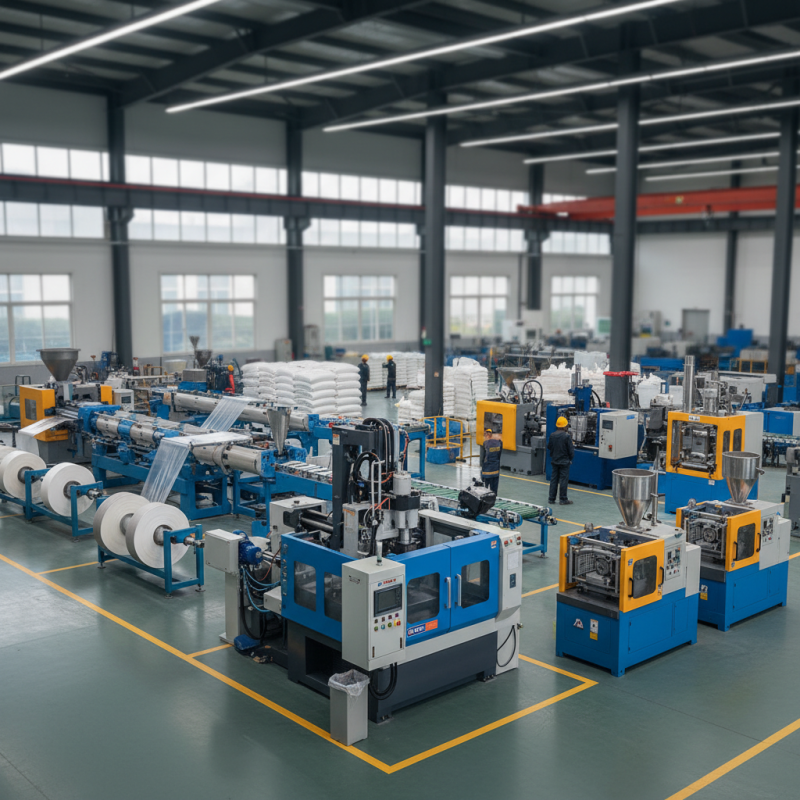
Types of Plastic Processing Equipment Commonly Used in Industry
In the plastic processing industry, various equipment plays a vital role. Commonly used machines include extrusion machines, injection molding machines, and blow molding machines. Each type serves specific functions in shaping plastic products. For instance, extrusion machines create continuous plastic sheets or profiles by forcing melted plastic through a die. This process is essential for producing items like pipes and tubes.
Injection molding is another widely adopted method. It involves injecting molten plastic into a mold, allowing precise control over product design. This technique is popular for manufacturing items such as containers, automotive parts, and toys. However, choosing the right machine requires careful consideration. Not all molds work with every injection machine.
Blow molding creates hollow plastic products like bottles. This process involves inflating a hot tube of plastic inside a mold. While effective, it requires attention to detail. Variations in temperature or pressure can lead to defects. Operators need training and experience to minimize risks. Selecting the right equipment is crucial for achieving high-quality production. Understanding these types can help businesses make informed decisions.
Top 10 Plastic Processing Equipment Sales in China
Key Features to Consider When Purchasing Plastic Processing Equipment
When purchasing plastic processing equipment, key features should be a priority. First, consider the machinery's efficiency. According to a report by ResearchAndMarkets, energy-efficient machines can reduce operational costs by up to 30%. This is crucial, given rising energy prices.
Evaluate the technology used in the equipment. Advanced technology enhances precision and product quality. Machines with better automation can also minimize human error, leading to consistent output. Always check the compatibility of technology with your production needs.
Tips: Assess the support and service offered by suppliers. This can affect equipment longevity and performance. Look for suppliers who offer training and maintenance.
Another aspect is scalability. The equipment should adapt to increasing production demands. In a fast-moving market, it’s vital to invest in machinery that can grow with your business. This adaptability can prevent unnecessary reinvestment in new equipment.
Lastly, review safety features. Safety is paramount in manufacturing. Machines must comply with industry standards to protect workers. Equipment lacking in safety features could lead to costly accidents.
Tips: Research user reviews to gain insight into reliability and performance. Real-world experiences often highlight strengths and flaws of machines.
Top Manufacturers of Plastic Processing Equipment in China
In the growing plastic processing industry in China, choosing the right equipment can significantly impact productivity. Several manufacturers are known for their innovative solutions, producing a range of machinery that caters to diverse processing needs. According to industry reports, the plastic processing equipment market in China is projected to reach over $20 billion by 2025, highlighting the demand for cutting-edge technology.
Top manufacturers often focus on advanced machinery like injection molding machines, blow molding equipment, and extrusion lines. These companies are investing in R&D to improve energy efficiency and reduce waste. Recent data indicates that energy-efficient machinery can lower operational costs by up to 30%. While these advancements are promising, the high initial investment can be a barrier for small manufacturers.
**Tip:** When selecting equipment, consider not only the machine's capabilities but also the manufacturer's service and support. Evaluate their expertise in after-sales service to minimize downtime.
In addition, the plastic processing sector is seeing an increase in automation. This shift enhances production speed and consistency. However, implementing automation can come with challenges, such as the need for skilled operators. Balancing automation with labor can be a tough call for many manufacturers.
**Tip:** Assess the potential return on investment (ROI) for automation versus traditional methods. It’s important to weigh the pros and cons closely.
Top 10 Plastic Processing Equipment to Buy in China
| Equipment Type |
Application |
Key Features |
Price Range (USD) |
Manufacturing Capacity (units/day) |
| Injection Molding Machine |
Mass production of plastic parts |
High precision, energy-efficient |
$10,000 - $50,000 |
100 - 800 |
| Blow Molding Machine |
Production of bottles and containers |
Fast cycle time, versatile |
$15,000 - $70,000 |
150 - 1000 |
| Extrusion Machine |
Sheet, film, and pipe production |
Continuous process, high output |
$20,000 - $80,000 |
200 - 1200 |
| Thermoforming Machine |
Production of packaging materials |
Flexible molds, low waste |
$8,000 - $45,000 |
50 - 400 |
| Compounding Machine |
Material blending and formulation |
High mixing efficiency, customized output |
$30,000 - $120,000 |
50 - 300 |
| Granulator |
Recycling plastic waste |
High durability, energy-efficient |
$5,000 - $30,000 |
100 - 600 |
| Mixing Machine |
Mixing additives with base materials |
Consistent quality, user-friendly |
$2,000 - $15,000 |
100 - 500 |
| Robot Automation |
Automation for various processes |
High precision, reduced labor costs |
$10,000 - $70,000 |
30 - 200 |
| Cooling System |
Temperature control in processing |
Energy efficient, stable cooling |
$3,000 - $20,000 |
N/A |
| Packaging Machine |
Final packaging of products |
Customizable, fast operation |
$10,000 - $60,000 |
100 - 1000 |
Cost Comparison of Plastic Processing Equipment in the Chinese Market
When sourcing plastic processing equipment in China, cost is a critical factor. Recent reports indicate that the price of injection molding machines can vary greatly. For instance, an entry-level machine may cost around $15,000, while high-end models can exceed $100,000. This price range reflects differences in technology, efficiency, and durability.
Extrusion machinery often shows similar trends. Budget options start at about $10,000, while advanced machines might reach $80,000 or more. These variations can be attributed to the complexity of the equipment and the materials used in their construction. A 2022 study by the China Plastics Machinery Industry Association highlighted that the average cost of plastic processing equipment has risen by 8% annually. This increase is attributable to materials cost and technological advancements.
Quality assurance remains crucial in selecting equipment. Lower-priced models may compromise on build quality or energy efficiency. Buyers must weigh the initial costs against long-term operational expenses. It appears that many manufacturers overlook the importance of maintenance costs when making purchasing decisions. This oversight can lead to higher total cost of ownership. Exploring these aspects presents challenges, yet it’s vital for informed sourcing decisions.
Tips for Importing Plastic Processing Equipment from China
Importing plastic processing equipment from China can be a rewarding venture. However, it's crucial to understand the process thoroughly. Start by researching reputable manufacturers. Check their certifications and client reviews. Ask for references to gauge their reliability. This will save you time and money down the road.
Once you identify potential suppliers, request detailed quotations. These should include pricing, specifications, and delivery timelines. Pay close attention to the terms of payment. Some manufacturers may require a hefty deposit. This could pose risks if communication falters later on. Evaluating shipping options is essential too. Consider the costs and expected delivery times for various methods.
After selecting a supplier, keep clear communication channels open. Document all agreements and confirm every detail. Misunderstandings can lead to complications. It's also wise to understand the customs process in your country. This knowledge can prevent unexpected delays. Reflect on your approach regularly to improve future transactions.
FAQS
: Focus on machinery's efficiency. Energy-efficient machines can lower operational costs significantly.
Advanced technology enhances precision and product quality. It also reduces human error.
Look for scalable equipment that can adapt to increasing production needs, avoiding reinvestment.
Ensure machines comply with industry safety standards to protect workers from accidents.
Good supplier support can enhance equipment longevity and performance through proper training and maintenance.
Automation can improve efficiency, but it requires skilled operators and careful investment considerations.
Reviews provide real-world insights into machinery strengths and weaknesses, aiding informed decision-making.
Yes, automation may involve high initial costs but can lead to better ROI in the long run.
Conclusion
In the "Plastic Processing Equipment Buying Guide," the article explores essential aspects of procuring plastic processing equipment in China. It begins by outlining the various types of equipment commonly utilized in the industry, highlighting their specific functions and applications. Readers are advised to consider key features such as durability, efficiency, and technological advancements when selecting equipment.
The guide also discusses prominent manufacturers in China, providing insights into their market reputation and product offerings. Additionally, it presents a cost comparison of different equipment options available in the Chinese market, helping buyers make informed financial decisions. Finally, practical tips for successfully importing plastic processing equipment from China are offered, ensuring a smooth procurement process. Overall, this guide serves as a comprehensive resource for anyone looking to invest in plastic processing machinery.
 Zhida Plastic Machinery
