Zhida Plastic Machinery
How Plastic Machinery Improves Manufacturing Efficiency is not simply about producing more parts per hour. It is about making each production run more consistent, predictable, and economical. Modern injection molding machines can control temperature, pressure, and cycle timing with precision. In extrusion, stable screw speeds and melt temperatures help maintain a uniform profile. These details matter: a small process drift can mean rejected parts, wasted resin, and extra machine time. Automation can also handle repetitive tasks, such as removing molded components or moving them to inspection. The benefits show up on the factory floor.
Manufacturing engineer Shigeo Shingo wrote, “The most dangerous kind of waste is the waste we do not recognize.” His warning offers a useful lens for evaluating plastic machinery: faster equipment cannot fix a poorly understood process. Sensors and machine data can help operators spot temperature variation, extended cycle times, and unplanned stops. But the numbers still need careful interpretation. A new machine may reduce scrap, yet actual results depend on mold condition, material handling, maintenance, and operator training. Automation is not a cure-all. That distinction is easy to miss. A practical efficiency review should compare output, downtime, scrap rates, and energy use before and after changes. The comparison may reveal an awkward truth: the machine was not the main bottleneck. Still, when equipment, people, and process controls work together, plastic manufacturers can improve throughput without treating speed as the only measure of success.
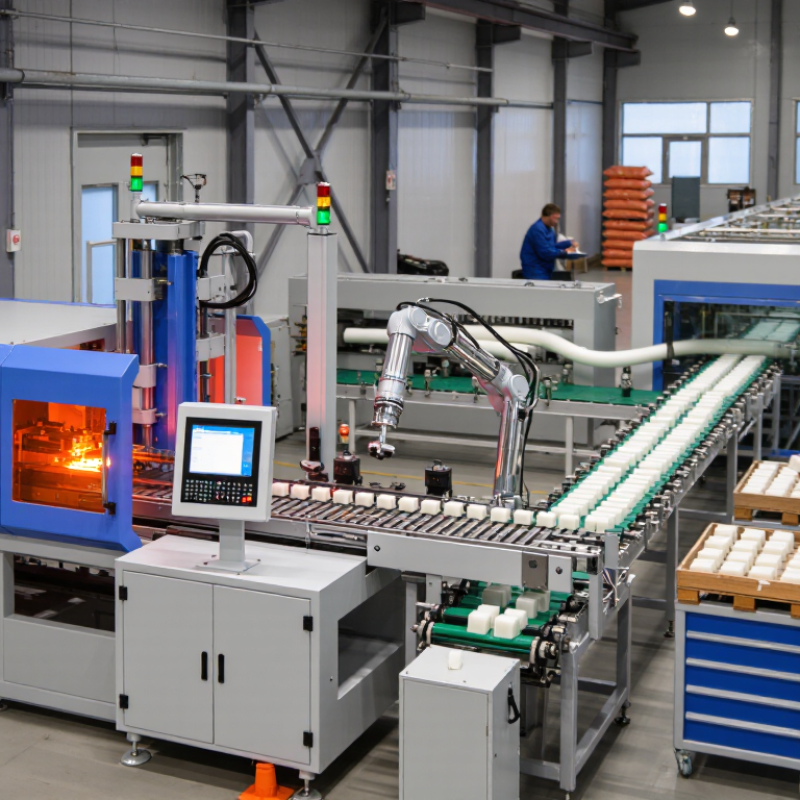
Plastic machinery works best as a connected production system, not a row of isolated machines. A molding unit can send finished parts along a conveyor while sensors track cycle time and detect jams. When the dryer, feeder, and molding machine share clear settings, material arrives at a steadier rate. Operators spend less time carrying bins or adjusting feed by guesswork.
The links matter. A temperature change at the barrel can affect cooling time, part dimensions, and the pace of downstream packing. Controls that show these conditions together help teams spot a slowdown before it spreads. Simple signals, such as a feeder alarm or a rising reject count, can guide a quick check. Small changes add up.
Automation is not a cure-all. A poorly placed sensor may report problems late, and old equipment can be difficult to connect. Start by mapping where material waits, where operators intervene, and where defects appear. Then connect the processes that create the most delay. Keep manual checks in the routine; a machine display cannot explain every warped edge or unusual sound. The setup may still need adjustment after a few production runs. That is normal.
Automation in plastic machinery can raise output by keeping routine tasks moving at a steady pace. Automated resin feeding supplies material to the processing unit, while temperature and pressure sensors help maintain consistent conditions. A robotic arm can remove a molded part as soon as the mold opens, then place it on a conveyor for cooling or inspection. Seconds saved each cycle can add up across a full shift.
Less lifting. Fewer pauses. Operators spend less time carrying parts, loading machines, or repeating simple handling steps. They can instead watch several machines, check surface quality, and respond when an alarm signals a process change. In a packaging line, for example, a robot may stack finished containers while a worker checks for warped rims or incomplete molding. Automation changes the work; it does not remove the need for trained people.
The gains depend on careful setup. A poorly positioned gripper may scratch parts, and a sensor covered with dust can trigger unnecessary stops. These details are easy to overlook during installation. Teams should test cycle timing, safety interlocks, and part quality under real production conditions, then review the results after changes. Automation may not fix an unstable process by itself. It can, however, make a reliable process more productive while reducing repetitive manual handling.
| Manufacturing Area | Automation or Machinery Function | Operational Effect | How to Measure It |
|---|---|---|---|
| Material feeding and drying | Automated loaders and dryers deliver resin to the machine and control drying conditions. | Reduces routine material handling and helps maintain consistent resin preparation. Drying requirements vary by polymer and material supplier. | Manual material-handling hours; material moisture readings; feed interruptions. |
| Injection molding cycle | Programmable controls manage repeatable steps such as injection, packing, cooling, and mold opening. | Supports consistent cycle execution and reduces the need for operators to control each step manually. Cycle time depends on the part, material, mold, and machine settings. | Cycle time; parts produced per operating hour; cycle-to-cycle variation. |
| Part removal and handling | Robots or automated take-out systems remove molded parts and transfer them to the next operation. | Reduces repetitive manual picking and can keep part handling in step with the machine cycle when properly integrated. | Operator touch time per part; handling-related stoppages; parts per labor hour. |
| Trimming and finishing | Automated cutters, fixtures, or secondary equipment perform defined finishing steps. | Standardizes repeatable operations and reduces manual handling; tooling and process setup still require validation. | Finishing time per part; rework rate; variation in finished dimensions. |
| In-line inspection | Sensors, cameras, or measurement systems check specified product features during production. | Can identify defects closer to the point of production, helping teams contain quality issues before more parts are made. | Inspection coverage; defects detected; false-reject rate; time from defect detection to response. |
| Process monitoring | Machine controls record process settings, alarms, and production status. | Gives operators and maintenance teams more consistent information for troubleshooting and process review. | Unplanned downtime; alarm frequency; time to diagnose and resolve stoppages. |
| Changeovers and setup | Stored recipes and documented setup procedures help reproduce approved machine settings. | Reduces reliance on memory during repeat jobs; changeover duration still depends on mold, material, and required adjustments. | Changeover time; startup scrap; time to reach approved production conditions. |
| Production planning | Production monitoring connects machine status with scheduled jobs and output targets. | Helps teams spot delays and coordinate labor, materials, and downstream equipment more effectively. | Schedule attainment; machine utilization; completed good parts versus planned output. |
| Worker safety and ergonomics | Automation can move heavy, hot, or repetitive handling tasks away from manual work areas when designed with suitable guarding and safety controls. | Reduces some exposure to repetitive handling and hot components; safe access and operator training remain essential. | Manual handling tasks; safety observations; ergonomic risk assessments. |
Top Ways Plastic Machinery Improves Manufacturing Efficiency
Precision controls help plastic machinery hold steady conditions from one production cycle to the next. Operators can adjust melt temperature, screw speed, injection pressure, and cooling time. When these settings stay within suitable ranges, parts are more likely to match their intended dimensions. A small temperature shift can change how plastic flows into a mold. Pressure that is too high may cause flash; too little can leave thin or incomplete areas. Small changes matter.
Tips: Check sensor readings against calibrated instruments, especially after maintenance. Record settings alongside scrap rates and part measurements. This makes patterns easier to spot, though it takes discipline. Not always convenient.
Better control can also reduce material waste. Stable shot sizes and consistent pressure help limit rejected parts and unnecessary purging between runs. Cooling controls matter, too: uneven cooling can warp parts, even when the mold looks fine. In practice, the best settings often depend on resin, part shape, and machine condition, so copying a recipe may not work. Review sample parts during setup, measure critical features, and adjust one variable at a time. Controls cannot fix every process problem, but they can make useful changes easier to identify.
How precision controls can improve product quality and material use
In this illustrative scenario, tighter process control is associated with a lower material scrap rate. Values are examples, not measured industry benchmarks; actual results depend on the machine, material, product, and operating conditions.
Electricity can hide inside every shot cycle. Heaters, hydraulic pumps, chillers, and compressed-air systems all add to unit cost. The International Energy Agency’s 2011 report, Energy-Efficiency Policy Opportunities for Electric Motor-Driven Systems, estimates that motor-driven systems account for about 70% of industrial electricity use. Efficient pumps and variable-speed drives can therefore matter in plastics production, especially when machines idle between runs. Less wasted power also means less heat to remove.
Consider a 100-kilowatt production line running 4,000 hours yearly. It uses 400,000 kilowatt-hours. A measured 15% reduction would save 60,000 kilowatt-hours, or $6,000 at $0.10 per kilowatt-hour. This is an illustrative calculation, not a guaranteed result. Still, a newer press is not automatically cheaper. Compare actual energy use per kilogram of acceptable product, and include maintenance, scrap, and cooling costs. Small leaks matter.
Tips: Log power during production, standby, and changeovers. Check pump pressure and barrel insulation before buying new equipment. Test one machine first, then compare energy per kilogram under similar production conditions. If output or scrap changes, the comparison needs another look.
Predictive maintenance gives plastic machinery teams warning before a small fault becomes a stopped line. Sensors can track motor temperature, vibration, hydraulic pressure, and cycle time. A gradual rise in gearbox vibration may signal bearing wear. A heater zone that takes longer to reach its set point may point to a failing element. These clues help technicians inspect specific parts during planned changeovers instead of waiting for an alarm mid-run. Less surprise.
When maintenance follows equipment condition, machines spend fewer hours idle, and operators avoid restarting unstable processes. In extrusion and molding, temperature drift or uneven feed can create scrap, off-spec parts, and purge material. Predictive alerts may help teams replace worn screws, seals, or filters before output quality slips. Still, predictions are not guarantees. Dirty sensors or incomplete records can mislead a team. An alert should prompt an inspection, not an automatic part swap.
Tips: Record baseline temperatures and vibration when equipment runs well. Review trends weekly, and link alerts to technicians’ inspection notes. Allow time to verify each warning. Data helps, but shop-floor judgment still matters.
Automated resin feeding keeps material moving, while robots remove molded parts quickly. Saving seconds each cycle can add up across a shift.
No. Operators can monitor several machines, inspect surfaces, and respond to alarms. A worker may still spot a warped rim that a robot misses.
A poorly aligned gripper can scratch parts. Dust on a sensor may cause unnecessary stops. Small details matter.
Test cycle timing, safety interlocks, and part quality under real production conditions. Review results after changes. A tidy trial run may not reflect a full shift.
Efficient pumps and variable-speed drives can reduce electricity use, especially when machines idle between runs. Less wasted power can also mean less heat to remove.
At 4,000 operating hours yearly, the line uses 400,000 kilowatt-hours. A 15% reduction saves 60,000 kilowatt-hours, or $6,000 at $0.10 per kilowatt-hour. This is only an example.
No. Compare energy use per kilogram of acceptable product, including maintenance, scrap, and cooling costs. New equipment is not automatically cheaper.
Log power during production, standby, and changeovers. Check pump pressure and barrel insulation. Test one machine first, then compare energy per kilogram under similar conditions. If output or scrap changes, the comparison needs another look.
How Plastic Machinery Improves Manufacturing Efficiency begins with connecting production stages into a smoother, more coordinated process. When equipment moves materials and products reliably between operations, manufacturers can reduce delays and keep production flowing. Automation further increases output by handling repetitive tasks consistently, freeing workers to focus on oversight and other valuable work. Together, integrated systems and automated processes can help facilities produce more while reducing manual effort.
Precision controls support consistent product quality by managing key production settings and limiting material waste. Energy-efficient equipment can also lower operating costs by using power more effectively, while predictive maintenance helps identify potential equipment problems before they cause unexpected stoppages. By combining these capabilities, plastic machinery can improve productivity, resource use, and production reliability, helping manufacturers reduce waste and maintain efficient operations over time.
