Zhida Plastic Machinery
Zhida Plastic Machinery
Zhida Plastic Machinery
Explore our elite collection of engineered extrusion systems, thermoforming machinery, and recycling assets optimized for premium throughput.
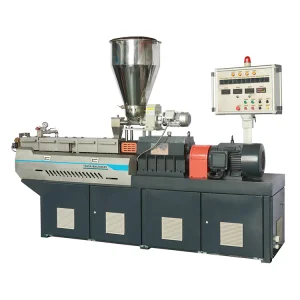
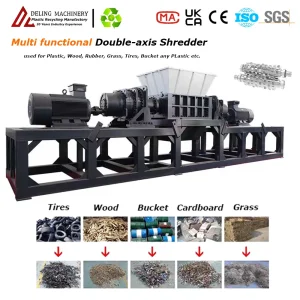
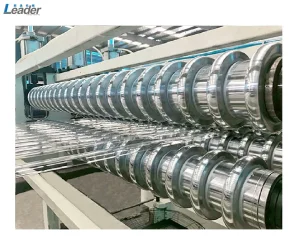
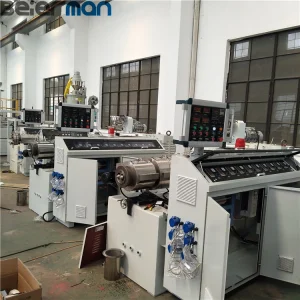
In modern extrusion and injection molding applications, mechanical components are continuously subjected to extreme degradation environments. The processing of modern polymer compositions—incorporating corrosive fillers like calcium carbonate, glass fibers, halogenated flame retardants, and bio-based plastics—imposes intense mechanical stress and chemical aggression on screw and barrel surfaces.
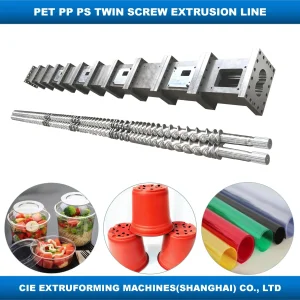
Traditional nitrided steels, while economical, fail to offer long-term wear resistance when exposed to these composite formulas. A Bimetallic Screw Barrel utilizes advanced centrifugal casting for the barrel lining, and plasma powder cladding (PTA) for the screw flights, creating an alloy layer that outperforms nitrided components by up to 5 times.
By casting specialized iron-based, nickel-based, cobalt-based, or tungsten carbide-based alloys inside the bore, the barrel obtains a composite structure: a ductile, shock-absorbing outer shell combined with an ultra-hard, wear-resistant interior lining.
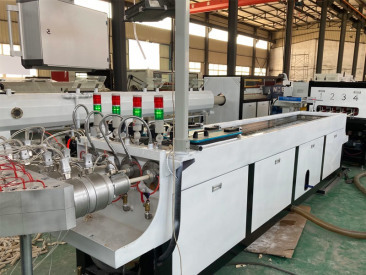
A comparative overview of metallurgical options designed to target specific degradation mechanisms during polymer processing.
The core capability of a bimetallic screw barrel factory lies in its capacity to handle diverse alloy formulations. Depending on the processing conditions (abrasion, corrosion, thermal fatigue, or high pressure), different alloy matrices are cast or welded onto substrate materials like 38CrMoAlA, 42CrMo, or Tool Steel.
| Alloy Classification | Dominant Metallurgy Elements | Hardness Range (HRC) | Recommended Application Scenarios | Relative Cost Factor |
|---|---|---|---|---|
| Fe-based (Alloy 102) | Fe, Cr, B, Si | HRC 58 - 62 | General purpose extrusion, < 15% glass fiber reinforcement, PP, PE, PS processing. | Baseline (Economical) |
| Ni-based (Alloy 303) | Ni, Cr, B, Si, Fe | HRC 55 - 60 | Highly corrosive environments, PVC processing, acidic additives, fluoropolymers. | Moderate-High |
| Co-based (Alloy 505) | Co, Cr, W, Ni, B, Si | HRC 56 - 62 | High-temperature engineering plastics (PEEK, LCP), high thermal fatigue areas. | Premium |
| Tungsten Carbide (Alloy 888) | WC (30% - 50%), Ni, Cr matrix | HRC 62 - 68 | Ultra-abrasive processing, >30% glass fiber/filler compounding, recycled PCR polymers. | Ultimate Performance |
Our manufacturing facility applies high-speed centrifugal casting to deposit the molten bimetallic alloy uniformly onto the inner surface of the steel backing tube, preventing porosity, voids, or thermal stress cracking.
PTA welding fuses premium alloy powder to the outer diameter of the screw flights. This minimizes dilution from the base metal, yielding a concentrated, wear-resistant barrier on wear-prone surfaces.
Using multi-spindle vertical honing equipment, we achieve bore surface finishes below Ra 0.2 µm, promoting laminar polymer flow, lower shear stress, and reduced material stagnation zones.
Translating advanced metallurgical properties into performance benefits across global commercial manufacturing divisions.
Extruding CPVC/UPVC pipe profiles involves handling highly corrosive hydrochloric acid gases liberated during heating. In Southeast Asia and South Asia (India, Vietnam, Pakistan), where construction demands are high, nickel-based alloy liners ensure continuous operation without bore erosion.
Producing multi-layer blown films and drip irrigation pipe profiles for agricultural systems demands high wear resistance due to pigment masterbatches and recycled materials. Bimetallic barrels maintain the pressure profiles required for uniform film gauge control.
Post-consumer recycling (PCR) processes introduce abrasive sand, paper, and metal particles. Using tungsten carbide-coated screws allows machinery in Latin America, Egypt, and Europe to compound contaminated materials without rapid wear.
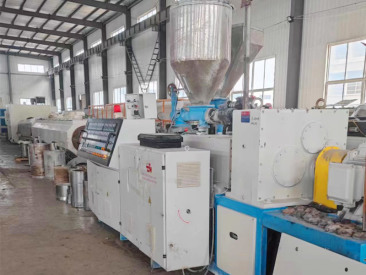
Established in 2018 and headquartered in the industrial port city of Ningbo, China, Ningbo Zhida Plastic Machinery Co., Ltd. has developed into a leading supplier of used and new plastic machinery solutions. Adhering to our core principle of "integrity-based, quality first," we have assisted over 1,000 plastic product manufacturers globally in optimizing their production costs.
Our client network spans markets including India, Morocco, Vietnam, Egypt, Pakistan, Bangladesh, Zambia, Ethiopia, and beyond. Through our specialized dual-track supply model—combining refurbished used equipment with custom new machinery—we address varying operational budgets and technical demands.
Our team travels throughout China weekly to source machinery from large pipe, profile, sheet, and plate manufacturing facilities. Consequently, 90% of our second-hand inventory is produced by leading Chinese brands: Jwell, BeiEr, FangLi, Jurry, JinHu, and KraussMaffei (Maffeih).
Choose the balance of cost and customization that fits your factory's production requirements.
The manufacturing cluster of Ningbo, Zhejiang province, represents the center of China's plastic processing machinery sector. This concentrated ecosystem enables bimetallic screw barrel factories to benefit from localized raw material sourcing, specialized heat treatment facilities, and advanced CNC machining centers.
Integrated Raw Material Sourcing: The close proximity to major domestic steel mills guarantees consistent access to high-grade structural alloys like 38CrMoAlA, ensuring structural stability before the centrifugal casting stage.
Logistical Advantages: Ningbo hosts the Port of Ningbo-Zhoushan, one of the world's busiest container hubs. This offers direct ocean freight access to global manufacturing zones. Situated near both the airport and the seaport, our facility provides flexible and efficient transport routing.
Rapid Lead Times: Leveraging our supply networks, we can source customized equipment from the domestic market within one week, minimizing production downtime for our international clients.
Gearbox bearings, gear wear, motor windings, and screw flight clearances are fully measured against OEM standards.
Worn screw barrels are replaced with new bimetallic systems to restore output pressure and prevent wear.
Extruders are test-run under loaded electrical parameters to verify motor stability, heating control, and torque consistency.
Assessing emerging material advancements, smart coating developments, and sustainability initiatives shaping the industry.
R&D is focused on incorporating nanostructured materials into Ni-Cr-B matrices, which refines grain boundaries and increases wear life under high-pressure conditions.
Future bimetallic barrels may feature integrated sensor channels that monitor wear depth through electrical impedance changes, supporting predictive maintenance strategies.
Transitioning centrifugal casting systems to induction heating reduces energy consumption by 25%, aligning production processes with international environmental standards.
Every machine undergoes a strict inspection protocol to ensure structural integrity prior to packaging and dispatch.
Establishing reliable operations across borders requires rigorous quality controls. At Ningbo Zhida, we inspect mechanical components, verify electrical systems under load, and apply protective coatings to prepare equipment for ocean transport.
We provide chemical analysis records for raw materials, ultrasonic inspection reports for cast liners, and dimensional clearance certifications for screw-to-barrel interfaces. Our location near transport links helps us arrange convenient container loading and shipping schedules.
Addressing common engineering and procurement inquiries regarding bimetallic screw barrels and custom machinery sourcing.
Explore our specialized auxiliary systems, blow molding, and raw material compounding equipment designed for high-performance setups.