Zhida Plastic Machinery
Zhida Plastic Machinery
Zhida Plastic Machinery
Explore our high-performance industrial equipment engineered to streamline manufacturing processes, increase output efficiency, and ensure product uniformity.
Global Factories Assisted
Years Engineering Experience
CE Certified Lines
Cost Reduction Potential
In the modern plastics compounding sector, the demand for high-efficiency Filler Masterbatch Production Lines has witnessed unprecedented growth. Global polymer manufacturers, dealing with volatile petrochemical prices, rely heavily on Calcium Carbonate (CaCO3) and Talc filler masterbatches to significantly cut raw material costs, modify physical properties, and improve printability.
Whether targeting PE, PP, or biodegradable carrier resins, the extrusion process requires high levels of precision. A CE-certified production line ensures that factories in Europe, America, and other strictly regulated regions comply with critical health, safety, and environmental protection guidelines. This certification is not just a regulatory checkmark—it is a guarantee of robust mechanical architecture, reliable electronic insulation, and advanced pressure-ventilation mechanisms.
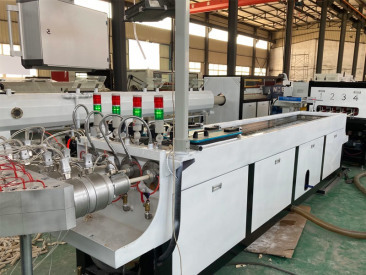
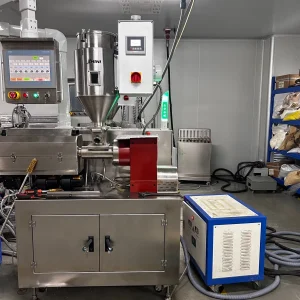
Inside the modern processing workshop of Ningbo Zhida Plastic Machinery Co., Ltd.
Why international procurement managers prioritize Chinese-engineered filler masterbatch production lines.
We work closely with China's top-tier manufacturers like Jwell, BeiEr, FangLi, Jurry, and JinHu. This provides access to top-tier metallurgical screw designs, robust gearboxes, and precise barrel heating systems.
Our dual approach blends new customizable extruder lines with professionally refurbished, pre-owned equipment. This gives buyers flexibility, allowing savings of 30% to 60% compared to buying entirely brand-new western lines.
Our engineering team inspects and tests motors, gearboxes, inverters, and dosing systems. Before packing and shipping from the Ningbo port, each production line goes through hot-run testing.
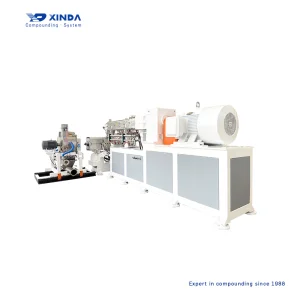
A reliable filler masterbatch extrusion system relies on the co-rotating twin-screw design. Handling up to 80% inorganic mineral content requires optimal polymer melt temperature control, stable pressure distribution, and intensive shear forces to prevent agglomeration of the Calcium Carbonate or Talc particles.
The Length-to-Diameter (L/D) ratio typically ranges from 40 to 48. This length provides enough space for sequential feeding, melting, dispersion, vacuum degassing, and discharge pressure generation.
Gravimetric multi-component feeding systems are critical for high-filler applications. By constantly weighing the flow rate of both the mineral powders and base polymers, the PLC system automatically adjusts extruder speeds to prevent deviations in masterbatch concentration.
Selecting pelletizing units depends on your target polymer carrier. For standard Polyethylene (PE) and Polypropylene (PP) filled with CaCO3, a Water-Ring Die-Face Pelletizing system offers cost efficiency and simple operation. For biodegradable plastics (like PLA or PBAT) or high-viscosity formulations, an Underwater Pelletizing System or a Cooling Strand Line is recommended to prevent hot pellets from sticking together.
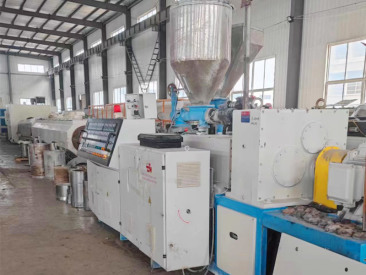
Our quality control inspectors verify alignment, gear synchronization, and wiring diagrams before export.
Established in 2018 in the manufacturing hub of Ningbo, China, we are a leading exporter of second-hand and newly customized plastic extrusion machinery. Guided by our core principle of "integrity-based, quality first", we have supported over 1,000 plastic product manufacturers worldwide in cutting capital expenditures.
Our logistics network is situated near major airports and deep-water ports, ensuring straightforward transit routes to ports across India, Morocco, Vietnam, Egypt, Pakistan, Bangladesh, Zambia, Ethiopia, and beyond.
A smart procurement framework that balances equipment performance with your project budget constraints.
Best for: Medium-sized factories seeking to scale up compounding throughput without stretching capital budgets.
Best for: High-capacity plants demanding continuous automated runs, specialized carrier designs, and strict regulatory compliance.
How different regions utilize compounding technology to optimize local manufacturing pipelines.
Widely used across Southeast Asia and the Middle East. High-speed T-die and blown film extrusion lines incorporate PE-based filler masterbatch to enhance film stiffness, opacity, and tactile print quality.
Commonly used in European automotive supply chains. High-loading talc filler lines improve tensile strength, dimensional stability, and heat deflection temperatures of injection-molded components.
Designed for PBAT/PLA base matrices to assist farms in Europe and North America. Incorporating treated calcium carbonate accelerates natural soil degradation without releasing microplastic toxins.
Key technologies shaping next-generation masterbatch extrusion lines.
Modern twin-screw setups are scaling up to support 85% filler loading. This requires highly efficient surface coating processes for Calcium Carbonate using stearic acid coupling agents.
Standard lines are shifting to cloud-connected, IoT-enabled control centers. These monitor screw wear, torque anomalies, and motor heat build-up to prevent unplanned downtime.
Replacing belt systems with direct-drive, high-torque water-cooled motors cuts power transmission losses, dropping plant electricity bills by up to 15%.
Multi-stage vacuum degassing lines extract volatile monomer residues and moisture. This creates bubble-free, high-density granules ideal for thin-walled plastic products.
Quick answers to common questions about buying, operating, and configuring filler masterbatch machines.
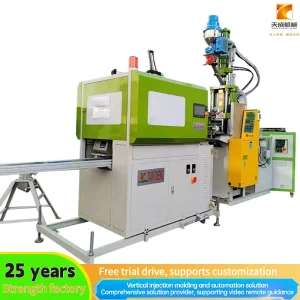
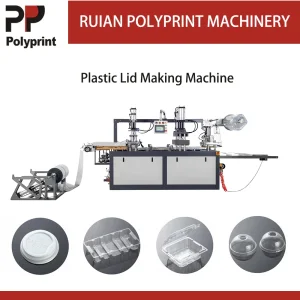
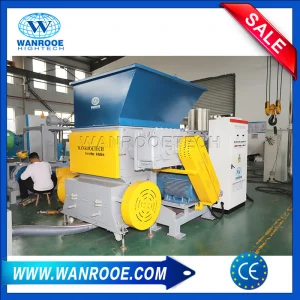
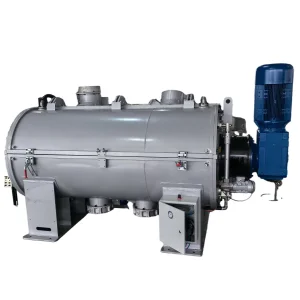
Complete your processing lines with our selection of industrial mixers, shredders, custom blow molders, and cooling systems.