Zhida Plastic Machinery
Zhida Plastic Machinery
Zhida Plastic Machinery
In the high-stakes world of industrial extrusion and precision molding, thermal stability dictates product quality, cycle times, and operational longevity. As a leading hub for industrial manufacturing engineering, China’s wholesale water-cooled chiller market has evolved from supplying basic refrigeration loops to delivering highly engineered, thermodynamic regulation systems designed for modern smart factories.
Utilizing high-surface-area shell-and-tube condensers, water-cooled chillers yield a significantly higher Coefficient of Performance (COP) compared to air-cooled equivalents, reducing facility-wide energy expenditures by up to 35%.
Advanced PID controllers modulate refrigerant flow to match dynamic heat loads from fast-cycling extrusion barrels or high-speed injection molds, keeping temperature margins within ±0.1°C.
Indoors and shielded from outdoor elements, water-cooled scroll and screw chillers suffer less environmental wear, boasting an operating life of 15 to 20+ years under optimal water treatment regimens.
Procuring industrial cooling infrastructure from China involves more than comparing capacity ratings. Modern procurement managers balance upfront capital expenditures with long-term energy utilization metrics, environmental safety, and regulatory compliance.
European and North American buyers must select chillers that satisfy Ecodesign Tier 2 standards and ASHRAE 90.1 guidelines. This has accelerated the adoption of variable frequency drive (VFD) screw compressors with superior Part-Load values (IPLV).
Global protocols require moving away from R22. Contemporary chiller exports from China utilize eco-friendly alternatives like R410A, R134a, and next-generation low-GWP options like R32, R454B, and R1234ze to secure future regulatory compliance.
Industrial machinery must be engineered to match the regional electrical profiles of destination countries: 380V-415V/50Hz for Europe and Asia, 460V-480V/60Hz for Central and North America, or specialized medium voltages for heavy industrial plants.
| Feature Parameter | Scroll Water-Cooled Chillers | Screw Water-Cooled Chillers | Magnetic Bearing Centrifugal Chillers |
|---|---|---|---|
| Capacity Range | 10 kW – 150 kW (3 to 45 Tons) | 100 kW – 1500 kW (30 to 420 Tons) | 350 kW – 3000+ kW (100 to 850+ Tons) |
| Typical COP Range | 4.2 – 5.2 | 5.0 – 6.2 | 6.5 – 8.0+ |
| Compressor Architecture | Hermetic Orbiting Scroll | Semi-Hermetic Twin Rotor Screw | Oil-Free Levitation Radial Impeller |
| Common Applications | Medical tooling, individual extruders, lab lines | Centralized factory loops, heavy profile lines | Large-scale petrochemical, district cooling, microelectronics |
| Maintenance Profile | Low maintenance, plug-and-play modular layout | Scheduled bearing inspections, slide valve checks | Highly specialized, low mechanical wear due to zero oil |
The industrial chiller industry is undergoing a digital transformation. Suppliers are integrating advanced controls, remote diagnostics, and energy recovery mechanisms into their standard designs to meet the demand for smarter production environments.
Traditional fixed-speed compressors cycle on and off, generating thermal spikes and higher mechanical fatigue. Integrating Variable Frequency Drives (VFD) allows the compressor motor to adapt its speed to the heat load, eliminating cycle spikes and generating energy savings of up to 40% under partial load conditions.
Advancements in metallurgy allow the use of brazed plate heat exchangers (BPHE) and shell-and-tube configurations designed with enhanced internal grooving. This improves heat transfer rates, reduces the overall physical footprint of the chiller, and minimizes the required refrigerant charge.
Modern water-cooled chillers are equipped with PLC microcontrollers supporting Modbus, BACnet, or EtherNet/IP communication protocols. This enables integration into centralized SCADA platforms, allowing plant operators to monitor evaporation pressures, suction temperatures, flow rates, and vibration analysis in real-time, preventing failures before they happen.
By capturing the heat rejected during the refrigeration cycle, chillers configured with desuperheaters can divert waste heat to pre-heat water for plant washing, boiler feeds, or facility heating, improving overall system energy efficiency.
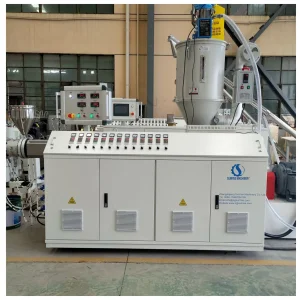
A reliable industrial chilling loop is only as good as the processing machinery it cools. Established in 2018 in Ningbo, China, Ningbo Zhida Plastic Machinery Co., Ltd. specializes in the sales, refurbishment, and custom manufacturing of new and used extrusion, compounding, and downstream machinery.
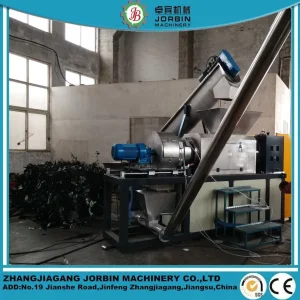
Ningbo Zhida Plastic Machinery Co., Ltd. was established in 2018, with its headquarters located in Ningbo, China. The company specializes in the sales and service of used/second-hand plastic machinery and is currently one of the largest suppliers of used/second-hand plastic extrusion machines in China. Since its establishment, the company has always adhered to the principle of "integrity-based, quality first". We have successfully helped over 1000 plastic product manufacturers reduce production costs, including manufacturers from India, Morocco, Vietnam, Egypt, Pakistan, Bangladesh, Zambia, Ethiopia and other countries.
Furthermore, we have a cooperating team dedicated to the manufacturing of new machinery, which can provide you with brand new plastic machinery. Through the dual-track model of "used/second-hand machinery supply + new machinery customization", we provide our customers with one-stop and diversified plastic machinery solutions, and accurately meet the different budget and production needs of our customers. You can choose the used/second-hand machinery with high cost-performance, or you can choose the new machinery with significant price advantages.
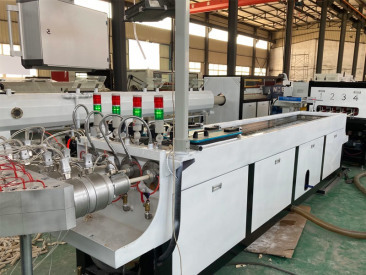
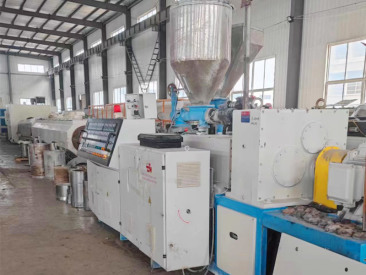
Our sourcing team travels throughout China weekly, maintaining strong relations with local large-scale pipe, profile, sheet, and plate factories. 90% of our used/second-hand plastic extrusion machines are manufactured by the top five brands in China, including Jwell, BeiEr, FangLi, Jurry, JinHu, and KraussMaffei.
Our engineering team has 15 years of experience in maintaining and testing plastic extrusion machines. We inspect the motor, gearbox, inverter, and pump on every line, performing repairs and replacements as needed. We test all equipment before arranging shipment to ensure they run well at the customer's factory. Refurbishment services are available to deliver machinery in clean, updated colors.
• Inventory has undergone strict quality inspection by senior engineering teams.
• Refurbishment and warranty services are available.
• Pricing is 30% - 60% lower than buying brand new machinery.
• Partnered R&D team tailored for customized production configurations.
• Full-process service: solution proposals, equipment debugging, and safe delivery.
• Factory-direct pricing with strict build oversight.
Every step in plastic processing generates heat that must be managed to maintain product dimensions and cycle times. Proper design of the cooling system ensures the machinery performs to its engineering specifications.
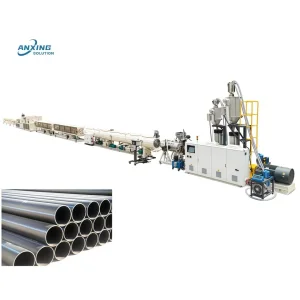
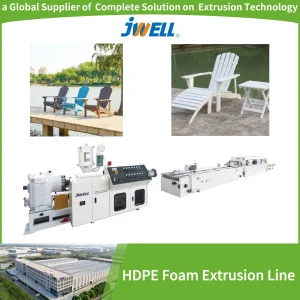
During extrusion (e.g., HDPE pipe, PVC profile, or sheet extrusion), cooling water is circulated through the calibration sleeves, sizing tanks, and cooling baths. Insufficient cooling capacity leads to pipe deformation, uneven wall thickness, and visual defects. Our water-cooled chillers deliver steady chilled water flow to maintain product dimensions at high throughputs.
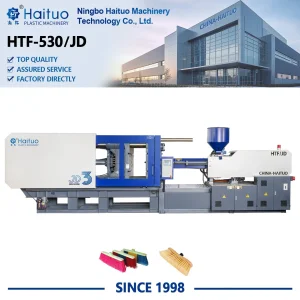
In injection molding operations, mold cooling accounts for up to 70% of the total cycle time. Delivering low-temperature, pressurized water directly to the internal mold cooling channels speeds up part solidification, shortening cycle times and improving productivity.
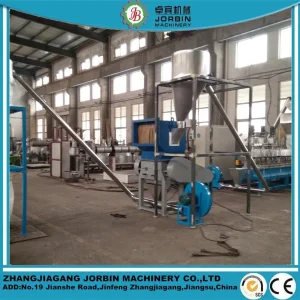
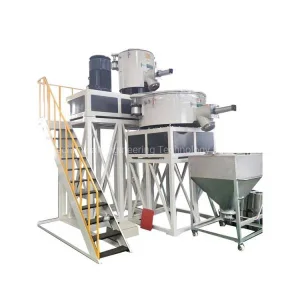
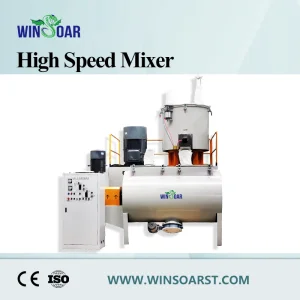
High-speed mixers, compounding lines, and masterbatch pelletizers convert mechanical shear into thermal energy. Cooling jackets on high-speed mixers and feed throats prevent materials from agglomerating prematurely, protecting equipment and compound uniformity.
Shipping heavy industrial machinery and cooling systems requires robust logistics, compliance with international pressure vessel regulations, and structured on-site support.
All industrial chillers and plastic processing lines are built to meet target region regulations, including CE directives for Europe, UL standards for the USA, and ASME pressure vessel certification for shell-and-tube components.
Our engineering team performs a multi-point inspection before shipment. We run load tests on motors, check gearbox oil levels, verify inverter control, and test electrical lines under load, providing testing videos and documentation before shipping.
Located in Ningbo, China, close to the port and local airport, we coordinate container loading, export customs clearance, and secure sea freight to reduce transit risk and delivery costs.
Cooling capacity is calculated based on the plastic material type, throughput per hour (kg/h), specific heat capacity, and delta temperature (ΔT) required across the cooling tank. For example, processing polyethylene (PE) at 500 kg/h typically requires a cooling system capacity calculated with safety factors (often around 15 to 20 Tons of refrigeration, depending on incoming water temperatures).
Water-cooled chillers offer higher efficiency (COP), smaller footprints, and longer lifespans since they are housed indoors. They use a cooling tower to reject heat, which operates closer to the ambient wet-bulb temperature than dry-bulb temperature, resulting in more stable and energy-efficient cooling compared to air-cooled models, especially in hot environments.
We supply systems using R410A, R134a, R407C, and next-generation low-GWP refrigerants such as R32 and R1234ze, ensuring compliance with global environmental regulations like Europe's F-Gas rules and United States EPA regulations.
All second-hand and refurbished machinery undergo dynamic load testing. Our engineers inspect gearboxes, test motor currents, evaluate inverter parameters, and pressure-test heat exchangers and oil loops. Replacement of worn wear parts is performed before final packaging and shipping.
Water-cooled systems require water treatment to prevent scale, corrosion, and biological fouling inside the condenser tubes. Regular cleaning of cooling tower basins, tracking condenser approach temperatures, and scheduling chemical flushes are key practices for maintaining high heat transfer efficiency.